Ford F53 Speed Sensor Left vs Right: Save Money on Interchangeable Parts
Read full question
I'm wondering if these sensors are actually the same part? Maybe the only difference is the wiring harness length? If that's the case, could I buy the cheaper right-side sensor and somehow make it work on the left side by extending the wires? I'd really appreciate any guidance on whether this is possible and if it could save me some money on this repair.
Quick Answer
Ford F53 left and right speed sensors use the same sensor element with different harness lengths. You can use the cheaper right-side part and extend the wiring to fit the left side. Save significant money on this common repair.
What's Going On
Yes, the left and right front wheel speed sensors on your 2007 Ford F53 chassis may be interchangeable mechanically, but this should be verified by comparing part specifications. The main difference is indeed the wiring harness length and routing, which you're absolutely right that you can modify. Since Ford discontinued the part and aftermarket left sensors are running around $700 (rough ballpark — actual cost varies by region, brand, and model year and changes over time, so get current quotes) while right sensors are half that price, buying the cheaper right-side sensor and adapting the harness is a smart approach that can save you $350.
For sourcing at reasonable prices, check Rock Auto, Amazon, or eBay for "Ford F53 right front wheel speed sensor" or "Ford F450/F550 right front ABS sensor" since they often share the same part. You might find them for $200-400 instead of the $700 you're seeing for left-side specific parts. The key is finding the correct reluctor ring tooth count and mounting configuration, which should match between sides on your chassis.
Why This Happens
Ford discontinued many F53 chassis-specific parts because these were primarily used in RV applications with lower production volumes compared to regular F-series trucks. The aftermarket fills the gap, but suppliers often focus on the more commonly replaced right-side sensor, leaving the left side as a specialty item with inflated pricing. This creates the price disparity you're experiencing.
The wheel speed sensors on your F53 work by detecting the rotation of a reluctor ring (toothed wheel) attached to the hub assembly. The magnetic pickup generates electrical pulses that the ABS/traction control system reads. Since both front wheels use the same hub design and reluctor ring configuration, the sensors themselves are mechanically identical - only the harness routing differs to reach the respective sides of the vehicle.
Speed sensor failure is common on these chassis due to road debris, moisture intrusion, and the constant vibration from heavy RV use. The sensors are exposed to harsh conditions under the vehicle, and the magnetic pickup can fail internally or the wiring can corrode at connection points.
Getting Ready
SAFETY WARNING: Disconnect the vehicle battery before working on any ABS or electrical system components to prevent accidental airbag deployment and protect electronic components from power surges.
Before ordering the right-side sensor, verify the part numbers and specifications match between sides. You'll need the vehicle's ABS module information and current sensor specifications. Check if your chassis has different reluctor ring tooth counts between sides, though this is uncommon. Take photos of your current left sensor mounting and wiring routing for reference.
Gather your tools: basic hand tools, wire strippers, heat shrink tubing or electrical tape, dielectric grease, and possibly a multimeter to test the new sensor before installation. You'll also want to measure the current harness length to determine how much additional wire you might need to extend or reroute the right-side harness to reach the left-side mounting location.
Order the right-side sensor from a reputable supplier - Rock Auto often has the best prices, while Amazon provides quick delivery. Consider ordering from multiple sources if you find significantly cheaper options, as you can return the higher-priced ones. Also pick up some additional automotive-grade wire (same gauge as the sensor harness) and proper connectors if you need to extend the harness length.
Walking Through the Fix
Start by removing the old left sensor and comparing it physically to your new right-side sensor to confirm they're mechanically identical. The mounting bracket, threaded portion, and sensor head should match exactly. Test the new sensor's resistance with a multimeter if it's a passive sensor (active sensors may not show meaningful resistance readings - verify specifications with manufacturer documentation or service manual) to ensure it's functional before installation.
For the harness modification, you'll need to measure and compare the harness lengths to determine if extension is needed to reach the left-side connection point. Use the same gauge wire, make solid connections with heat shrink tubing, and route the extended harness away from heat sources and moving parts. Follow the original left-side routing path as closely as possible.
When installing, clean the sensor mounting hole thoroughly, check wheel bearing condition for excessive play or roughness (bearing wear affects sensor operation), and apply a thin coat of dielectric grease to prevent corrosion. Thread the sensor in by hand first, then tighten to manufacturer specifications. Ensure the sensor gap to the reluctor ring is correct - per manufacturer specifications (consult service manual for exact gap), though this is usually set automatically when properly threaded in.
Before installation, ensure the ignition is off and battery is disconnected as previously mentioned. After installation, reconnect the system, clear any ABS codes with a scanner, test drive the vehicle at various speeds, and verify the ABS system recognizes the new sensor. Monitor for any new codes and ensure the ABS warning light stays off during normal operation.
Beyond DIY Territory
If you discover the sensors aren't mechanically identical or have different electrical specifications between sides, you'll need the proper left-side sensor despite the cost. Some F53 chassis had running changes during production that could affect sensor compatibility, and forcing an incompatible sensor could damage the ABS module.
Consider having a shop with Ford diagnostic equipment verify the exact part specifications if you're unsure about compatibility. They can also check if there are any technical service bulletins or updated part numbers that might lead to more affordable alternatives. Sometimes Ford superseded parts with newer designs that are more readily available.
If the wiring harness modification proves more complex than expected - such as needing to splice into the ABS module connector or dealing with integrated circuits within the harness - this becomes electrical work that's better left to a professional. Incorrect wiring could damage expensive ABS components and create safety issues with your braking system.
Tools & Supplies You'll Need
 CRAFTSMAN 230 Pcs Mechanics Tool Set, Socket Wrench Set, Car Tool Kit with
A broad SAE/metric socket-and-ratchet set covers most RV fasteners. View on Amazon →
CRAFTSMAN 230 Pcs Mechanics Tool Set, Socket Wrench Set, Car Tool Kit with
A broad SAE/metric socket-and-ratchet set covers most RV fasteners. View on Amazon →
 IRWIN Vise-Grip Wire Stripper, 2 Inch Jaw, Cuts 10-24 AWG, ProTouch for
Strips and crimps in one tool — clean connections every time. View on Amazon →
IRWIN Vise-Grip Wire Stripper, 2 Inch Jaw, Cuts 10-24 AWG, ProTouch for
Strips and crimps in one tool — clean connections every time. View on Amazon →
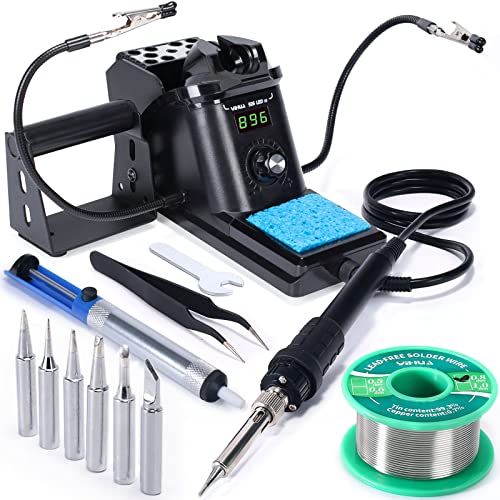 YIHUA 926 III 60W Digital Display Soldering Iron Station Kit w 2 Helping
Adjustable iron + solder for permanent wiring and board repairs. View on Amazon →
YIHUA 926 III 60W Digital Display Soldering Iron Station Kit w 2 Helping
Adjustable iron + solder for permanent wiring and board repairs. View on Amazon →
 AstroAI Digital Multimeter and Analyzer TRMS 6000 Counts Volt Meter Ohmmeter
Reads volts, continuity, and resistance — the #1 tool for tracing 12V faults. View on Amazon →
AstroAI Digital Multimeter and Analyzer TRMS 6000 Counts Volt Meter Ohmmeter
Reads volts, continuity, and resistance — the #1 tool for tracing 12V faults. View on Amazon →
Still need help? Ask an RV Mechanic
Get a personalized answer from a verified RV mechanic. Describe your specific issue and get step-by-step help for your rig.
Related Repair Guides
- RV Backup Camera Not Working? Complete Troubleshooting Guide
- RV Chassis Battery Draining & Dead Outlets - Troubleshooting
- RV Electrical Problems: 12V & 120V Troubleshooting Guide
- ECM Low Battery Warning RV: Complete Diagnosis & Fix Guide
- Protect Your RV Alternator When Charging Lithium
- RV 12V Lights Dimming: Complete Troubleshooting Guide
- RV 12V Auto Reset Breaker Size Guide: 30A, 40A, 50A Selection
- RV Shore Power Not Working: Complete Troubleshooting Guide
- No 12 Volt Power in RV: Complete Troubleshooting Guide
- RV DC Electrical System: Expert Guide to 12 Volt Systems
Need More Help?
Try our free RV calculators and tools to help diagnose and plan your repairs.
Browse RV ToolsWeight calculator, electrical planner, propane estimator & more
