Complete RV Lithium Battery and Solar Setup Guide for Trolling Motors: Safe Installation Tips
Read full question
I'm particularly worried about the charging setup - both for shore power charging at the marina and solar charging when I'm anchored out. I've heard you absolutely cannot use regular lead-acid chargers with lithium batteries, but I'm not sure what type of chargers I actually need. And for solar, someone mentioned something about MPPT controllers being required?
What specific type of chargers do I need for 24V and 36V lithium trolling motor batteries? I want to make sure I get the right equipment and don't fry a $1000+ battery pack. Are there particular lithium battery brands that are more reliable and safer than others?
Quick Answer
Use lithium-compatible 24V or 36V marine charger for trolling motor batteries. MPPT solar controller required for solar charging. Never use lead-acid chargers. Quality BMS lithiums like Battleborn recommended.
The Quick Answer
Absolutely, a portable solar panel can effectively keep your 24V or 36V lithium trolling motor battery topped off when shore power isn't available at your marina. For a 100Ah lithium battery system, panel sizing should be calculated based on your actual energy usage and available charging time, especially if you're using the trolling motor regularly. The key is matching your solar charge controller to your specific voltage system - you'll need an MPPT controller configured for your system voltage, not the standard 12V units most people think of first. Since lithium batteries have different charging profiles than lead-acid, make sure your solar setup includes a lithium-compatible charge controller that can handle the proper charging stages and voltage requirements for your specific battery chemistry.
Your onboard charger will handle the bulk of the charging when shore power is available, but the portable solar panel becomes your maintenance charging solution during those extended periods at anchor or when docked without power access. This hybrid approach - shore power charging as primary, solar as supplementary - is exactly how many RV owners successfully manage their lithium house batteries, and the same principles apply perfectly to your trolling motor application.
What's Causing This
The challenge you're facing is quite common for boaters who've upgraded to lithium trolling motor batteries. Unlike traditional lead-acid batteries that can sit for weeks with minimal self-discharge, lithium batteries hold their charge much better than lead-acid when not in use, but any significant energy usage needs to be replenished to maintain battery health and ensure you have full power available for your next fishing trip.
Your specific situation with intermittent shore power access at the marina creates what's essentially an energy budget problem. If you're using the trolling motor for several hours during fishing trips, you might be drawing 20-50Ah or more depending on your motor's power consumption and usage patterns for specific trolling motor models and conditions. Without consistent shore power to run your onboard charger, this deficit accumulates over time. While lithium batteries can handle partial state-of-charge better than lead-acid, consistently running them down without adequate recharging will eventually impact their longevity and performance.
The 24V or 36V configuration adds another layer of complexity because most off-the-shelf solar solutions are designed for 12V systems. In a 24V system, you're dealing with two 12V batteries in series, while a 36V system typically uses three 12V batteries in series. This means your charging system needs to properly charge the battery modules while delivering the correct overall system voltage. Many boaters make the mistake of trying to adapt 12V solar equipment, which can lead to improper charging and potential battery damage.
The intermittent nature of your shore power access also means you can't rely solely on the onboard charger's maintenance mode features. These chargers are designed to keep batteries topped off when continuously connected, but they can't compensate for the energy deficit that builds up during periods without shore power. This is where solar fills the gap perfectly, providing continuous low-level charging that matches well with lithium batteries' ability to accept charge efficiently throughout their voltage range.
Tools You'll Need
For a proper portable solar charging setup for your 24V or 36V lithium trolling motor battery, you'll need several key components that work together as a system. The centerpiece is a suitable portable solar panel, and for your application, panels in the 100-200 watt range are commonly effective. Quality portable panels that fold for easy storage and transport are available from various manufacturers. The exact wattage depends on your usage patterns, but a 150W panel provides a good balance of charging capability and portability for most trolling motor applications.
Your most critical component is the charge controller, and this is where many people make expensive mistakes. You absolutely need an MPPT charge controller that's specifically designed for your system voltage. For 24V and 36V systems, look for controllers from reputable manufacturers that can be configured for your specific voltage. Make sure whatever controller you choose explicitly supports lithium battery charging profiles and allows you to set the appropriate charging parameters.
You'll need proper marine-grade wiring and connections to tie everything together safely. This includes appropriate gauge wire for your system - typically 12 AWG or larger for the distances involved in boat applications - along with quality MC4 connectors for the solar panel connections and proper battery terminals for your specific battery setup. Don't forget weatherproof junction boxes and fuses or circuit breakers for safety. A fuse rated according to your charge controller's maximum current rating plus appropriate safety margin should protect your charging circuit.
For monitoring and control, consider investing in a battery monitor that can track your state of charge, charging current, and usage patterns. Quality battery monitors with Bluetooth connectivity are available for this application and can connect to your phone for easy monitoring. This helps you understand your actual energy usage and charging performance, allowing you to optimize your solar setup over time. You'll also want a basic multimeter for troubleshooting and initial setup verification.
Step-by-Step Fix
WARNING: Before beginning any electrical work, disconnect all power sources including shore power and battery connections. Wear safety glasses and ensure proper ventilation when working with batteries.
Setting up your portable solar charging system starts with properly sizing and selecting your components based on your specific energy needs. Begin by calculating your actual energy consumption during a typical fishing trip. Most trolling motors will draw between 20-60 amps depending on speed settings and conditions, so if you're running the motor for 4-6 hours total, you might use 80-200Ah. This gives you your baseline for what the solar system needs to replenish, though remember that solar charging will be happening continuously during daylight hours, not just when you're back at the marina.
SAFETY WARNING: All connections must be made with power disconnected. Always install fusing at the battery positive terminal before making any other connections.
Start the physical installation by mounting your charge controller in a protected location on your boat. It needs to be close enough to the battery to minimize voltage drop but protected from moisture and spray. Many boaters mount controllers inside battery compartments or under consoles. Run your battery cables first, using appropriately sized wire - typically 10 AWG or larger for the distances involved. Install your fuse or circuit breaker at the battery end of the positive cable, using the correct rating for your specific controller specifications.
The solar panel connections require careful attention to polarity and weatherproofing. Most portable panels come with MC4 connectors, which are excellent for marine applications when properly sealed. Run your solar input cables to the charge controller location, ensuring all connections are above potential splash zones. If you need to extend the panel cables, use quality MC4 extension cables rather than splicing, as the factory connections are much more reliable in marine environments.e environments. marine environments.
CRITICAL SAFETY WARNING: Never make solar panel connections in direct sunlight. Cover panels completely or work in shade to prevent electrical shock. Verify polarity twice before making any connections.
Programming your charge controller correctly is crucial for lithium battery health and performance. Access the controller's settings either through physical buttons or a smartphone app, depending on your model. Set the battery type to lithium or LiFePO4, then configure the charging voltages according to your battery manufacturer's specifications. For most lithium batteries, bulk charging voltage should be around 14.4V per 12V battery section, so 28.8V for 24V systems and 43.2V for 36V systems. Float voltage is typically lower, around 13.6V per section.
Test your system thoroughly before relying on it. With the panel in direct sunlight, verify that the controller shows appropriate charging current flowing to the battery. Check individual battery voltages if possible to ensure balanced charging across all batteries in your series string. Monitor the system for several days to understand charging patterns and verify that it's meeting your energy needs. Make adjustments to panel positioning or controller settings as needed to optimize performance.
Establish a routine maintenance schedule for your solar charging system. Clean the panel surface regularly, as marine environments tend to accumulate salt spray and grime that can significantly reduce charging efficiency. Check all connections periodically for corrosion, especially in salt water environments. Monitor battery voltages to ensure balanced charging, and keep track of overall system performance to identify any degradation over time.
When to Call a Pro
While setting up a basic portable solar charging system is within the capabilities of most DIY boat owners, there are several situations where professional installation or consultation becomes valuable. If you're uncomfortable working with electrical systems or unsure about proper wire sizing and fusing for your specific setup, a marine electrician can ensure everything is installed safely and to marine electrical standards. This is particularly important given the harsh marine environment and the potential consequences of electrical failures on a boat.
Complex battery management situations definitely warrant professional involvement. If your 24V or 36V lithium battery system uses individual battery management systems (BMS) that need to communicate with charging sources, or if you're dealing with a sophisticated battery bank with multiple parallel strings, the integration complexity increases significantly. Professional marine electricians who specialize in lithium installations understand the nuances of these systems and can ensure proper operation and longevity.
Consider professional consultation if your energy needs are more complex than basic trolling motor charging. If you're planning to add additional electrical loads, integrate with existing boat electrical systems, or need reliable charging for extended cruising, a professional can design a comprehensive system that handles all your energy needs efficiently. They can also help with regulatory compliance if your boat needs to meet specific electrical standards for insurance or documentation purposes.
If you encounter persistent charging problems, voltage imbalances between batteries, or unexplained power losses, professional diagnosis can save you time and money compared to trial-and-error troubleshooting. Marine electrical systems have unique challenges, and experienced professionals can quickly identify issues that might not be obvious to DIY installers. They also have specialized testing equipment to properly analyze system performance and battery health.
Finally, if your boat spends time in commercial or charter service, or if local regulations require professional installation of electrical modifications, you'll need certified marine electrical work. Even for personal boats, some insurance policies require professional installation of major electrical system modifications, so check your coverage before starting any work. Professional installation also typically comes with warranties and ongoing support that can be valuable for complex or critical electrical systems.
Tools & Supplies You'll Need
 Klein Tools 3005CR Wire Crimper Tool, Ratcheting Insulated Terminal Crimper
Ratcheting jaws set insulated terminals with a gas-tight crimp. View on Amazon →
Klein Tools 3005CR Wire Crimper Tool, Ratcheting Insulated Terminal Crimper
Ratcheting jaws set insulated terminals with a gas-tight crimp. View on Amazon →
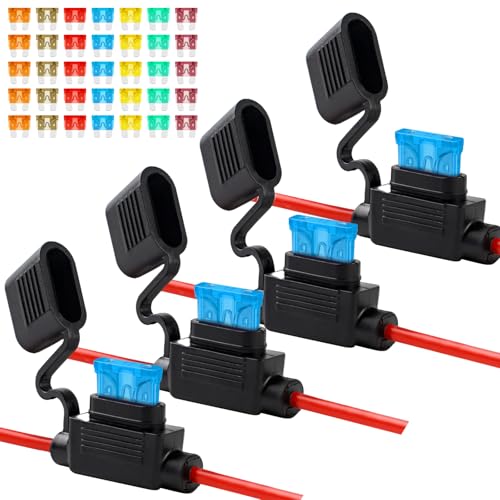 Cooclensportey 4 Pack 12AWG Inline Fuse Holder, Waterproof Fuse Holder with
Protects any 12V accessory run you add to the rig. View on Amazon →
Cooclensportey 4 Pack 12AWG Inline Fuse Holder, Waterproof Fuse Holder with
Protects any 12V accessory run you add to the rig. View on Amazon →
Still need help? Ask an RV Mechanic
Get a personalized answer from a verified RV mechanic. Describe your specific issue and get step-by-step help for your rig.
Related Repair Guides
- Georgetown GT7 Lithium Battery Conversion: Complete RV Installation Guide
- RV Inverter Guide: Modified vs Pure Sine Wave - Safe Power
- RC7-GS Inverter AGM Battery Settings: Complete Setup Guide
- RV Battery Draining Overnight? Find & Fix Parasitic Drain
- MagnaSine MS2012 Inverter Replacement & Upgrades
- RV MPPT Solar Controller E1 Error Code: Causes & Fixes
- RV Inverter Beeping 3 Times Then Shutting Off: Complete Troubleshooting Guide
- Lead Acid vs Lithium RV Batteries: Complete Upgrade Guide
- Xantrex Freedom X 1200 Inverter Low Battery Warning: Critical 11.2V Fix Guide
- RV Solar Panels Not Charging Battery: Low Amp Troubleshooting Guide
Need More Help?
Try our free RV calculators and tools to help diagnose and plan your repairs.
Browse RV ToolsWeight calculator, electrical planner, propane estimator & more
