How to Prevent LiFePO4 Battery Over-Discharge in RVs: Low Voltage Disconnect Guide
Read full question
Need a way to automatically cut power to the Ecoflow charger before the LiFePO4 batteries get too low. What's the best voltage cutoff point and what type of relay or disconnect device works for this application?
Quick Answer
Install low voltage disconnect relay in line feeding Ecoflow alternator charger. Victron Battery Protect or similar cuts power at set voltage. Set disconnect at 12.8V for LiFePO4 to stop at about 20% remaining capacity.
Bottom Line Up Front
You need to install a high-amperage battery disconnect relay or contactor between your 400Ah LiFePO4 house batteries and the EcoFlow alternator charger to prevent complete discharge. Your Victron BMV-712 can absolutely trigger this cutoff - you'll need a 12V relay rated for at least 100-150 amps continuous current, such as a Victron BatteryProtect BP-220 or Blue Sea Systems ML-ACR. Set the BMV-712's programmable relay to trigger at around 20-30% state of charge (approximately 12.8V for LiFePO4) to protect your battery bank from hitting the BMS shutdown point.
Root Causes
The core issue is that your EcoFlow 800W alternator charger will continue drawing power from your 400Ah house batteries until they reach their lower voltage cutoff, triggering the Battery Management System (BMS) shutdown. LiFePO4 batteries are designed to shut down completely when they reach critically low voltages to prevent cell damage, but this leaves you with zero house power.
Your current setup lacks a "smart" disconnect that can monitor battery state and cut the circuit before reaching dangerous discharge levels. The EcoFlow unit doesn't communicate with your house battery bank's state of charge, so it has no way of knowing when to stop drawing power. This is particularly problematic during extended air conditioning use where the Delta Pro's 3.6kWh capacity gets depleted quickly and continuously draws from your house batteries.
The BMV-712 you already have is perfectly capable of monitoring your battery bank and triggering a relay, but you need the right relay to handle the current load. Most small automotive relays can't handle the 60-80 amps that the 800W alternator charger might draw from your 12V house bank.
Before You Start
First, verify your BMV-712 is properly calibrated for your LiFePO4 chemistry. Set the battery capacity to 400Ah, charged voltage to 14.2V, and discharge floor to 20% (this gives you safety margin above the BMS cutoff). Check that the shunt is installed on the negative side of your battery bank and all loads pass through it for accurate monitoring.
Calculate your expected current draw: your 800W alternator charger pulling from 12V batteries draws approximately 67 amps (800W ÷ 12V), or up to 75 amps including inverter losses. This means you need a relay or contactor rated for at least 100 amps continuous duty to handle startup surges and provide safety margin.
Gather your materials: You'll need either a Victron BatteryProtect BP-220 ($180-200 (rough ballpark — actual cost varies by region, brand, and model year and changes over time, so get current quotes)) for a plug-and-play solution, or a Blue Sea Systems ML-ACR relay ($80-100) plus appropriate fusing and wiring. The BatteryProtect is easier to install and includes built-in protections, while the ML-ACR requires additional programming through the BMV-712 but costs less.
Plan your installation location: The disconnect device should be installed as close to the positive terminal of your battery bank as possible, before any other connections. Ensure adequate ventilation and protection from moisture, as these devices can generate heat under load.
The Repair Process
Start by programming your BMV-712's relay function. Access the VictronConnect app and navigate to the relay settings. Set the relay to "Battery voltage" mode, configure it as normally closed, and set it to open (turn off) when battery voltage drops to 12.8V and close (turn on) when voltage rises to 13.2V. This provides hysteresis to prevent rapid cycling and corresponds to roughly 20-30% state of charge for LiFePO4 batteries.
If using the Victron BatteryProtect BP-220, install it in the positive cable between your battery bank and the EcoFlow alternator charger connection point. The BatteryProtect has "Battery +" and "Load +" terminals clearly marked. Connect the BMV-712's relay output to the BatteryProtect's remote terminal using the included cable. The BatteryProtect will automatically cut power when the BMV-712 relay opens.
For the Blue Sea ML-ACR option, wire the relay coil to the BMV-712's relay output and install appropriate fusing (100A minimum) on both sides of the relay contacts. The ML-ACR is designed for battery combining but works perfectly as a load disconnect when controlled by external logic. Connect the relay's normally closed contacts in series with your positive feed to the EcoFlow alternator charger.
After installation, test the system by running your house batteries down while monitoring the BMV-712 display. The relay should trigger at your set voltage threshold, cutting power to the EcoFlow unit before your LiFePO4 BMS engages its protection. You should still have house battery power available for lights, water pump, and other essential systems after the cutoff occurs.
Professional Help Needed
Consider hiring a certified RV technician or marine electrician if you're uncomfortable working with high-current DC systems. The installation involves working directly with your battery bank's positive terminal, which poses risks of sparks, shorts, or fire if done incorrectly. Professional installation typically costs $200-400 but includes proper fusing, wire sizing, and system testing.
You may also want professional help if your current battery bank wiring doesn't have adequate space for adding the disconnect relay, or if you need to upgrade your main battery fusing and disconnect switches to accommodate the new configuration. Some installations require relocating existing components or adding a sub-panel for better organization.
If you frequently run into this discharge situation, consider consulting with an RV electrical specialist about adding more house battery capacity or a secondary charging source like solar panels. Your current setup with 400Ah house batteries and the Delta Pro is already quite robust, but extended AC use in hot climates can quickly overwhelm even large battery banks.
Tools & Supplies You'll Need
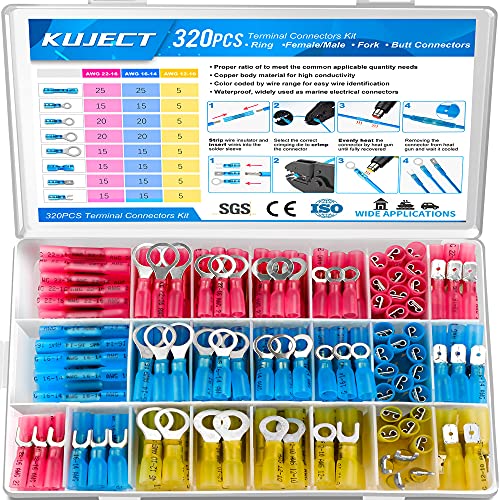 Kuject 320PCS Heat Shrink Wire Connectors Kit, Electrical Waterproof Crimp
Waterproof solder-seal connectors — the right fix for RV vibration and moisture. View on Amazon →
Kuject 320PCS Heat Shrink Wire Connectors Kit, Electrical Waterproof Crimp
Waterproof solder-seal connectors — the right fix for RV vibration and moisture. View on Amazon →
 AstroAI Digital Multimeter and Analyzer TRMS 6000 Counts Volt Meter Ohmmeter
Reads volts, continuity, and resistance — the #1 tool for tracing 12V faults. View on Amazon →
AstroAI Digital Multimeter and Analyzer TRMS 6000 Counts Volt Meter Ohmmeter
Reads volts, continuity, and resistance — the #1 tool for tracing 12V faults. View on Amazon →
Still need help? Ask an RV Mechanic
Get a personalized answer from a verified RV mechanic. Describe your specific issue and get step-by-step help for your rig.
Related Repair Guides
- Georgetown GT7 Lithium Battery Conversion: Complete RV Installation Guide
- RV Inverter Guide: Modified vs Pure Sine Wave - Safe Power
- RC7-GS Inverter AGM Battery Settings: Complete Setup Guide
- RV Battery Draining Overnight? Find & Fix Parasitic Drain
- MagnaSine MS2012 Inverter Replacement & Upgrades
- RV MPPT Solar Controller E1 Error Code: Causes & Fixes
- RV Inverter Beeping 3 Times Then Shutting Off: Complete Troubleshooting Guide
- Lead Acid vs Lithium RV Batteries: Complete Upgrade Guide
- Xantrex Freedom X 1200 Inverter Low Battery Warning: Critical 11.2V Fix Guide
- RV Solar Panels Not Charging Battery: Low Amp Troubleshooting Guide
Need More Help?
Try our free RV calculators and tools to help diagnose and plan your repairs.
Browse RV ToolsWeight calculator, electrical planner, propane estimator & more
