RV AC Making Loud Humming Noise? Fix Compressor Not Starting
Read full question
I've been dealing with this for days now and it's driving me crazy - especially with the heat we've been having! The humming is so loud that I'm worried something might be seriously damaged. I really hope this is something I can fix myself rather than having to call out a repair tech. What could be causing a compressor to hum loudly but not start up?
Quick Answer
A loud humming noise with a non-starting compressor typically indicates a failed start capacitor, bad compressor, or electrical issue. The start capacitor is the most common culprit and can often be replaced by DIYers with basic electrical skills.
Recognizing the Signs
Despite what you've heard, that loud humming noise from your RV's AC doesn't mean your compressor is broken—it's actually trying to tell you something completely different. Here's what's typically happening and how to address it.
What You Might Notice
When your RV air conditioner makes a loud humming or buzzing noise but the compressor won't start, it's typically caused by a failed start capacitor.
Root Causes
Start Capacitor Failure (70% of cases): Heat, age, and electrical surges cause capacitors to fail. RV rooftop units experience extreme temperature variations that accelerate capacitor deterioration.
Compressor Issues (20% of cases): Internal mechanical failure or seized compressor windings prevent startup. This is more serious and expensive to repair.
Electrical Problems (10% of cases): Low voltage, loose connections, or faulty contactors can prevent proper compressor operation. Check for 120V at the compressor terminals.
Why This Happens in RVs
RV air conditioners face unique challenges including constant vibration, temperature extremes, and irregular power quality at campgrounds. Dometic and Coleman units are particularly susceptible to start capacitor failure due to their compact design and harsh operating environment.
What to Grab
- Multimeter or capacitor tester
- Screwdrivers (Phillips and flathead)
- Insulated pliers
- Replacement start capacitor (if needed)
- Work gloves
- Safety glasses
Fixing the Problem
- Turn off power at the breaker - Never work on AC electrical components with power on. Switch off the AC breaker and unplug the unit if accessible.
- Access the AC unit - Remove the shroud or access panel on your rooftop AC. Most Dometic, Coleman, and Carrier units have removable panels secured with screws.
- Locate the start capacitor - Look for a cylindrical or oval-shaped component near the compressor, usually labeled with microfarad (µF) ratings like "35/5 µF" or similar.
- Discharge the capacitor safely - Use an insulated screwdriver to discharge each terminal to the metal case/ground. Capacitors can hold dangerous charges even when power is off.
- Test the capacitor - Use a multimeter set to capacitance mode or a dedicated capacitor tester. Compare readings to the label specifications. A reading significantly lower than rated value indicates failure.
- Inspect for physical damage - Look for bulging, leaking, or burnt terminals on the capacitor. These are clear signs of failure requiring replacement.
- Check electrical connections - Ensure all wire connections to the compressor and capacitor are tight and corrosion-free. Clean any corroded terminals with contact cleaner.
- Test the compressor - If the capacitor tests good, use a multimeter to check compressor winding resistance. Infinite resistance or very low resistance indicates compressor failure.
Situations That Need a Professional
Call an RV technician immediately if:
- You're uncomfortable working with electrical components
- The compressor itself has failed (expensive repair/replacement needed)
- Multiple electrical components are malfunctioning
- You detect refrigerant leaks (ice buildup or hissing sounds - note that modern R-410A refrigerant is odorless)
- The unit trips breakers repeatedly after repairs
Compressor replacement can cost $800-1500 (rough ballpark — actual cost varies by region, brand, and model year, and changes over time, so get current quotes), so professional diagnosis is worth the service call fee.
Tools & Supplies You'll Need
 AstroAI Digital Multimeter and Analyzer TRMS 6000 Counts Volt Meter Ohmmeter
Reads volts, continuity, and resistance — the #1 tool for tracing 12V faults. View on Amazon →
AstroAI Digital Multimeter and Analyzer TRMS 6000 Counts Volt Meter Ohmmeter
Reads volts, continuity, and resistance — the #1 tool for tracing 12V faults. View on Amazon →
 Amartisan 10-Piece Magnetic Screwdrivers Set, 5 Phillips and 5 Slotted Tips
Phillips, flat, and Torx tips for panels, trim, and appliances. View on Amazon →
Amartisan 10-Piece Magnetic Screwdrivers Set, 5 Phillips and 5 Slotted Tips
Phillips, flat, and Torx tips for panels, trim, and appliances. View on Amazon →
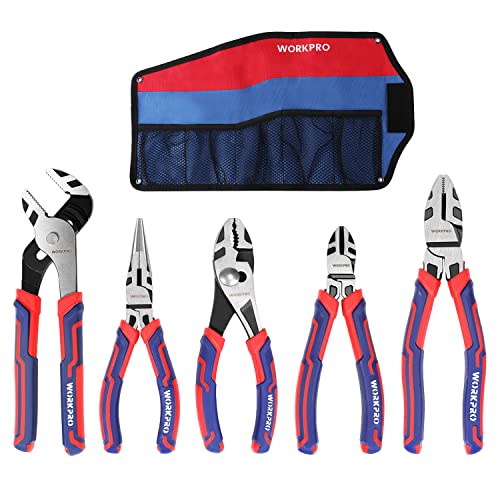 WORKPRO Pliers Set, Premium Cr-V Construction, Includes 6 Inch Slip Joint
Slip-joint, cutting, and groove-joint pliers in one set. View on Amazon →
WORKPRO Pliers Set, Premium Cr-V Construction, Includes 6 Inch Slip Joint
Slip-joint, cutting, and groove-joint pliers in one set. View on Amazon →
 G & F Products unisex adult All Purpose Utility Work Gloves High Performance
Protect hands during heavy or sharp work. View on Amazon →
G & F Products unisex adult All Purpose Utility Work Gloves High Performance
Protect hands during heavy or sharp work. View on Amazon →
Still need help? Ask an RV Mechanic
Get a personalized answer from a verified RV mechanic. Describe your specific issue and get step-by-step help for your rig.
Related Repair Guides
- Norcold 1210 Not Cooling: No Error Codes Troubleshooting Guide
- Dometic 12V Refrigerator Not Cooling on Battery Power - Complete Troubleshooting Guide
- RV Refrigerator Ammonia Smell: Leak Repair & Safety Guide
- How to Fix a Squeaking Dometic Fan-Tastic Roof Fan in Your RV
- Dometic RV AC Not Cooling? 5 Common Fixes for Air Conditioner Troubleshooting Guide
- Norcold RV Refrigerator Won't Stay On Propane - Complete Troubleshooting Guide
- RV Refrigerator Troubleshooting: Complete Repair Guide
- RV AC Freezing Up? Fix Ice on Coils in 5 Steps
- RV 3-Way to 12V Compressor Fridge Replacement: Cut Power Use 80%
- RV Refrigerator Door Won't Stay Closed: 5 Best Latches
Need More Help?
Try our free RV calculators and tools to help diagnose and plan your repairs.
Browse RV ToolsWeight calculator, electrical planner, propane estimator & more
