Locking Air Chuck Extensions for RV Dual Wheel Tires
Read full question
I'm out there doing some kind of yoga pose, contorting myself to hold the regular chuck on the valve stem while simultaneously trying to keep my balance and not drop the hose. I watched another RVer breeze through this same task with some kind of extension that actually LOCKED onto the valve stem - no circus act required!
What is this magical device called, and can I somehow adapt it to work with my portable compressor? I'm tired of looking like I'm trying out for Cirque du Soleil every time I need to add 10 PSI!
Quick Answer
You need a "locking chuck extension" or "clip-on chuck extension" that locks onto valve stems without holding. These 6-12 inch extensions can be adapted to most portable compressors with threaded adapters.
The Quick Answer
What you're looking for is called a "locking chuck" or "snap-on chuck" - specifically a dual-head chuck or straight-through chuck that locks onto the valve stem without needing to be held in place. Yes, you can absolutely adapt this to work with your Ryobi 18v ONE+ compressor. The most common types are the Milton S-506 single-head locking chuck or a Presta/Schrader locking chuck. These thread onto standard 1/4" NPT fittings, so you'll likely need a simple adapter hose or fitting to connect it to your Ryobi's existing chuck connection.
What's Causing This
Your Ryobi 18v ONE+ comes with a basic trigger-style chuck that requires constant pressure to maintain the seal on the valve stem. This works fine for easily accessible tires, but creates a real problem for your outer rear dual tire where the valve stem points inward toward the RV frame. The awkward angle and tight space make it nearly impossible to hold that standard chuck firmly in place while the compressor runs.
The professional you observed likely used either a locking chuck (which clamps onto the valve stem and stays put) or a dual-head chuck that can approach the valve from different angles. These professional-grade chucks eliminate the need to manually hold pressure against the valve stem, which is exactly what you need for that difficult-to-reach rear tire position.
Your 160 PSI maximum pressure should handle most RV tires (which typically run 80-130+ PSI, though some large RVs may require 140+ PSI), so the Ryobi will handle the job fine, even if it takes longer than a shop compressor. The auto-shutoff feature will prevent over-pressurization while you're not actively monitoring.
Tools You'll Need
- Locking air chuck (Milton S-506 or similar - verify compatibility with your valve stem angle and length) - $15-25 (rough ballpark — actual cost varies by region, brand, and model year and changes over time, so get current quotes)
- 1/4" NPT to quick-connect adapter (if needed) - $5-8
- Teflon tape or pipe thread sealant - $2-3
- Adjustable wrench - for installation
- Air pressure gauge (if chuck doesn't include one) - $5-10
- Extension hose (optional, 3-6 feet) - $10-15
Step-by-Step Fix
First, examine your Ryobi's air hose connection. Most likely it has a quick-connect fitting or threaded connection where the current chuck attaches. If it's a quick-connect, you'll need a quick-connect to 1/4" NPT adapter. If it's already threaded, measure to confirm it's 1/4" NPT (most common).
Ensure the system is depressurized, then remove the existing chuck by either disconnecting the quick-connect or unscrewing the threaded connection. If threaded, turn counterclockwise while holding the hose steady. Clean any debris from the threads.
- Wrap the threads of your new locking chuck with 2-3 turns of Teflon tape, going clockwise when viewing the threads from the end
- Thread the chuck into the adapter or directly into the hose fitting, tightening hand-tight plus snug with a wrench (avoid over-tightening)
- If using an extension hose, connect it between the compressor hose and the new chuck using the same threading process
- Test the connection by running the compressor briefly and checking for air leaks at all connection points
For your specific rear tire situation, approach the valve stem straight-on, press the chuck firmly onto the stem until it locks (you'll hear/feel a click), then start your compressor. The chuck will maintain its seal without manual pressure, allowing you to monitor from a comfortable position. When finished, turn off the compressor, wait for pressure to equalize, then release the locking mechanism (typically by pulling back a collar or lever) before removing the chuck.
When to Call a Pro
This is definitely a DIY-friendly modification that most RV owners can handle in 10-15 minutes. However, consider professional help if you discover your Ryobi uses a proprietary connection that doesn't match standard air fittings, or if you're uncomfortable working with threaded air connections.
Also call a tire shop if you find that even with the new chuck, your outer rear tire consistently loses more than 5-10 PSI per month. This could indicate a slow leak in the valve stem, rim, or tire that needs professional diagnosis. Your Ryobi compressor is perfect for maintenance top-offs, but it's not the right tool for dealing with actual tire leaks or major pressure loss.
Tools & Supplies You'll Need
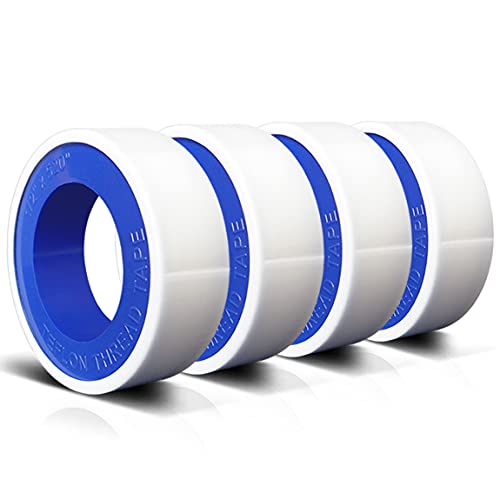 VOTMELL 4 Rolls 1/2 Inch(W) X 520 Inches(L) Teflon Plumbers Tape,Pipe Sealing
Seals threaded water and propane fittings. View on Amazon →
VOTMELL 4 Rolls 1/2 Inch(W) X 520 Inches(L) Teflon Plumbers Tape,Pipe Sealing
Seals threaded water and propane fittings. View on Amazon →
 WORKPRO 5-piece Adjustable Wrench Set, 4-Inch & 6-Inch & 8-Inch & 10-Inch &
Two sizes cover plumbing fittings and odd-size nuts. View on Amazon →
WORKPRO 5-piece Adjustable Wrench Set, 4-Inch & 6-Inch & 8-Inch & 10-Inch &
Two sizes cover plumbing fittings and odd-size nuts. View on Amazon →
Still need help? Ask an RV Mechanic
Get a personalized answer from a verified RV mechanic. Describe your specific issue and get step-by-step help for your rig.
Related Repair Guides
- Ford E-Series (E350/E450) RV Chassis: Complete Guide
- Ford F53 Chassis Complete Guide: Maintenance & Troubleshooting
- RV Flat Tire on Highway: Emergency Steps & Specialized Roadside Service Tips
- Ford E350 Dually Wheel Center Hole Size Guide: Front vs Rear Differences Explained
- RV Tires & Wheels: Complete Maintenance & Safety Guide
- Ford F53 Harsh Ride Fix: Shocks, Springs & Sway Bars
- 2003 Ford F53 Wheel Bearing Grease: Best Products
- Dutchstar Chassis Cracking Noise: Diagnosis & Repair Guide
- F53 Hydroboost Brake System Problems: Complete Repair & Troubleshooting Guide
- Which Dually Tire for RV Leveling Blocks? Inner vs Outer
Need More Help?
Try our free RV calculators and tools to help diagnose and plan your repairs.
Browse RV ToolsWeight calculator, electrical planner, propane estimator & more
