AGM Battery Deep Discharge Damage - East Penn 6V Recovery
Read full question
After plugging in at home, the Magnum charger went through its whole song and dance - bulk charging at 100A, then eventually settled into float at 13.2V. When I unplugged and fired up the generator briefly, voltage dropped from 13.0V to 12.7V.
So here's my million-dollar question: did my deep discharge adventure turn these batteries into expensive paperweights, or do these voltage readings suggest they might have survived my negligence? I'm cautiously optimistic but honestly have no idea what signs indicate whether AGM batteries bounced back from the dead or are just pretending to be okay!
Quick Answer
Your East Penn 6V AGM batteries likely sustained some damage from the complete discharge to 8V, but your charging behavior suggests they may have recovered reasonably well. The key indicators are how they hold voltage under load and their actual capacity.
The Quick Answer
Your six East Penn 6V AGM house batteries have likely suffered some damage from being completely discharged to around 8V, but they may still be recoverable. The fact that they're accepting charge and holding voltage reasonably well (only dropping 0.1V overnight) is actually encouraging. AGM batteries can typically survive one or two deep discharge events, but repeated deep cycling will permanently reduce their capacity. The charging behavior you're seeing - progressing from bulk to float to absorb - suggests your Magnum charger is working correctly and the batteries are responding, though they may have lost some of their original capacity.
What's Causing This
Deep discharge damage occurs when AGM batteries are drained below 50% of their capacity, and yours went much further - down to around 8V indicates they were nearly completely depleted. When AGM batteries sit at such low voltages for 2.5 weeks, the lead plates begin to sulfate heavily, which reduces capacity and can make them harder to charge. The repair shop should have disconnected your battery switch, as even minimal parasitic loads (like CO detectors, propane leak detectors, and inverter standby power) can drain batteries over time.
The good news is that your batteries are showing positive signs. The progression from bulk charging at 13.0V to float at 13.2V, then jumping to absorb at 14.2V when you reconnected, indicates the charger is reading the batteries' state correctly. AGM batteries typically need 14.1-14.4V for proper charging, so your Magnum's 14.2V absorb voltage is appropriate. The minimal voltage drop overnight (12.7V to 12.6V) suggests the batteries aren't heavily sulfated yet.
Tools You'll Need
- Digital multimeter capable of reading DC voltage accurately
- Battery conductance tester (hydrometers cannot be used on sealed AGM batteries)
- Battery load tester or carbon pile tester capable of testing 6V batteries
- Insulated wrenches and safety equipment
- Battery terminal cleaner and protectant spray
- Desulfating battery charger (if regular charging doesn't fully restore capacity)
- Notebook to record voltage readings and charging times
Step-by-Step Fix
- Continue the current charging cycle and monitor closely. Let your Magnum charger complete its full cycle - it should go from absorb charging back to float mode when the batteries reach full charge. This typically takes 12-24 hours of absorb charging for deeply discharged AGMs.
- Once in float mode, disconnect shore power and measure each battery's voltage individually using your multimeter. Healthy 6V AGM batteries should read 6.2-6.3V when fully charged and rested. Any battery reading significantly lower (below 6.0V) may have permanent damage.
- Perform a load test on each battery after they've rested for at least 2 hours without charging. Apply a 75-amp load for 15 seconds to each 6V battery - voltage should not drop below 5.1V during the test. If any battery fails this test, it needs replacement.
- Check your parasitic draw with all systems off and the battery switch on. Disconnect the negative battery cable, set your multimeter to DC amperage mode, and connect it between the negative cable and negative terminal. Draw should be less than 200 milliamps (0.2 amps) total for your setup. Higher draw means something wasn't turned off properly at the shop.
- Monitor battery performance over the next few weeks. Fully charge the batteries, then measure voltage daily to see how quickly they self-discharge. Healthy AGM batteries should only drop 0.1V per week maximum when not in use.
- If batteries show continued poor performance, consult your battery manufacturer's specifications before attempting any equalization, as most AGM manufacturers advise against equalization charging which can damage AGM batteries.
When to Call a Pro
Contact a professional battery specialist or RV technician if individual batteries are reading below 6.0V after charging, if any battery fails the load test, or if the batteries continue to lose more than 0.2V per day when not in use. These symptoms indicate permanent sulfation damage that requires battery replacement. Also call a pro if your parasitic draw exceeds 0.5 amps, as this suggests an electrical fault that needs professional diagnosis.
Consider professional help if you're uncomfortable performing load testing, as improper testing can be dangerous with large battery banks. A battery specialist can also perform capacity testing to determine exactly how much capacity you've lost, helping you decide whether replacement is economically justified. Given that quality 6V AGM batteries like your East Penn units cost $200-300 (rough ballpark — actual cost varies by region, brand, and model year and changes over time, so get current quotes) each, professional testing might save you money by identifying which specific batteries need replacement rather than replacing the entire bank.
Tools & Supplies You'll Need
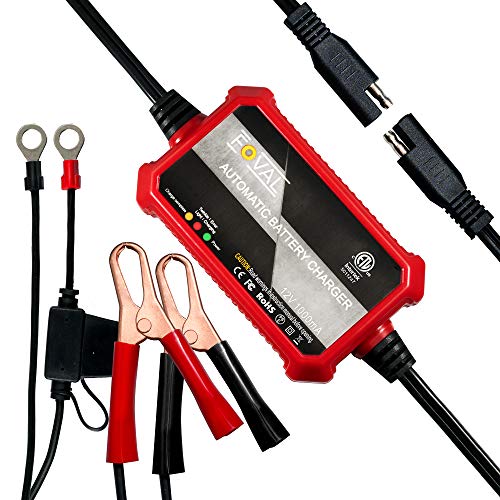 Foval Automatic Trickle Battery Charger 12V 1000mA Smart Battery Charger
Multi-stage charger/maintainer for house and chassis batteries in storage. View on Amazon →
Foval Automatic Trickle Battery Charger 12V 1000mA Smart Battery Charger
Multi-stage charger/maintainer for house and chassis batteries in storage. View on Amazon →
 AstroAI Digital Multimeter and Analyzer TRMS 6000 Counts Volt Meter Ohmmeter
Reads volts, continuity, and resistance — the #1 tool for tracing 12V faults. View on Amazon →
AstroAI Digital Multimeter and Analyzer TRMS 6000 Counts Volt Meter Ohmmeter
Reads volts, continuity, and resistance — the #1 tool for tracing 12V faults. View on Amazon →
Still need help? Ask an RV Mechanic
Get a personalized answer from a verified RV mechanic. Describe your specific issue and get step-by-step help for your rig.
Related Repair Guides
- Georgetown GT7 Lithium Battery Conversion: Complete RV Installation Guide
- RV Inverter Guide: Modified vs Pure Sine Wave - Safe Power
- RC7-GS Inverter AGM Battery Settings: Complete Setup Guide
- RV Battery Draining Overnight? Find & Fix Parasitic Drain
- MagnaSine MS2012 Inverter Replacement & Upgrades
- RV MPPT Solar Controller E1 Error Code: Causes & Fixes
- RV Inverter Beeping 3 Times Then Shutting Off: Complete Troubleshooting Guide
- Lead Acid vs Lithium RV Batteries: Complete Upgrade Guide
- Xantrex Freedom X 1200 Inverter Low Battery Warning: Critical 11.2V Fix Guide
- RV Solar Panels Not Charging Battery: Low Amp Troubleshooting Guide
Need More Help?
Try our free RV calculators and tools to help diagnose and plan your repairs.
Browse RV ToolsWeight calculator, electrical planner, propane estimator & more
