How to Fix RV Transfer Switch Not Detecting External Generator - Complete Troubleshooting Guide
Read full question
What causes this issue and what are my options to get the ATS to work with an external generator?
Quick Answer
External generators need signal wire to trigger ATS, which is only connected to onboard genset. Solutions include manual bypass switch, simulating the run signal, or universal voltage-sensing ATS.
Bottom Line Up Front
Your 1999 American Eagle's transfer switch isn't recognizing your external generator because it likely requires a minimum power threshold or specific voltage/frequency characteristics to activate the automatic changeover. Since your motorhome detects shore power and the built-in diesel genset but not your portable generator, the issue is almost certainly in the automatic transfer switch (ATS) sensing circuit. Most RV transfer switches from that era need to see at least 95-105 volts and proper 60Hz frequency before they'll switch over. Your smaller generator may be producing slightly low voltage under load, running at incorrect frequency, or the sensing circuit in your transfer switch has drifted out of specification over 25 years.
Root Causes
The most common cause is voltage sensing threshold issues in your automatic transfer switch. Most 1999-era RV transfer switches require seeing 104-108 volts before they'll engage, and many portable generators run at 100-104 volts under load, which falls below the threshold. Additionally, cheaper portable generators often have frequency drift under load, running at 58-62 Hz instead of the required 60 Hz steady.
Another possibility is that your transfer switch's sensing circuit has aged components. Capacitors and relays in 25-year-old transfer switches commonly drift out of specification, making them more finicky about what power sources they'll accept. The sensing circuit may also be looking for a specific waveform quality that your portable generator doesn't provide - older transfer switches sometimes reject modified sine wave inverter-generators.
Finally, there could be a wiring issue between your shore power inlet and the transfer switch. If the external generator power isn't reaching the transfer switch's sensing circuit properly due to a loose connection or corroded contact, it won't trigger the changeover even if the generator is producing good power.
Before You Start
First, test your external generator's output with a quality multimeter. Check both voltage and frequency - you need steady 120V ±5% and 60 Hz ±3 Hz. Test this both at no load and with a moderate load (space heater or hair dryer) connected. Many portable generators drop voltage significantly under load, which could explain why your transfer switch won't recognize it.
Locate your transfer switch - in your 1999 American Eagle, it's likely mounted in a compartment near the electrical panel or under a dinette seat. You'll need to access it to check connections and potentially adjust settings. Have your generator running and connected to shore power inlet during testing so you can see what voltage is actually reaching the transfer switch.
Gather the necessary tools: multimeter, screwdrivers, electrical contact cleaner, and possibly a small adjustable wrench. You'll also want your RV's electrical schematic if available, though most transfer switch operations are fairly standardized. Make sure you have adequate lighting in the work area since you'll be working with live electrical connections.
The Repair Process
Start by checking the voltage at the transfer switch input terminals while your external generator is running and connected. After shutting off the main breakers and using lockout/tagout procedures, remove the transfer switch cover to inspect connections. For voltage measurements, restore power carefully and measure voltage at the "shore power" input terminals using proper electrical safety precautions. If you're not seeing the generator's output voltage here, you have a wiring problem between the shore power inlet and transfer switch that needs to be traced and repaired.
If voltage is present at the transfer switch input, the problem is likely the sensing circuit threshold. Many older transfer switches have an adjustment screw or potentiometer for the pickup voltage. Look for a small adjustment screw labeled "voltage pickup" or similar. After shutting off all power sources and using lockout/tagout procedures, adjust this clockwise (lower threshold) in small increments. If adjustment must be done with power on, use extreme caution with insulated tools, proper PPE, and be aware of arc flash hazards when working on energized equipment. The goal is to lower the pickup voltage to match your generator's output voltage under load so it will accept your generator's output.
Check all connections inside the transfer switch for corrosion or looseness. Clean any corroded terminals with electrical contact cleaner and ensure all connections are tight. Pay special attention to the neutral connections, as a poor neutral connection can cause erratic sensing behavior. If you find green corrosion on any terminals, clean thoroughly and apply dielectric grease.
Test the transfer switch operation by starting with your external generator disconnected, then connecting it while monitoring the transfer switch. You should hear the relay click over within 6-30 seconds of connecting good power, depending on your transfer switch's delay timer setting. If adjustment doesn't work, the sensing relay itself may need replacement - most use standard automotive-type relays that cost $10-20 (rough ballpark — actual cost varies by region, brand, and model year and changes over time, so get current quotes) and are easily swapped.
Professional Help Needed
Call an RV technician if you're not comfortable working around live electrical connections or if the transfer switch doesn't have an obvious voltage adjustment. Working inside energized transfer switches requires experience to do safely, and a mistake can damage expensive electrical components or create a fire hazard.
You'll also need professional help if the transfer switch itself needs replacement. A new automatic transfer switch for your American Eagle will cost $300-600 plus labor, and installation requires understanding your specific electrical configuration. Some newer transfer switches offer better compatibility with various generator types and may solve your problem permanently.
Consider having the entire electrical system inspected if you discover multiple corroded connections or if the transfer switch adjustment doesn't hold. After 25 years, other components in your electrical system may also be marginal, and addressing everything at once can prevent future roadside breakdowns. A complete electrical system service typically runs $400-800 but can identify problems before they strand you.
Tools & Supplies You'll Need
 AstroAI Digital Multimeter and Analyzer TRMS 6000 Counts Volt Meter Ohmmeter
Reads volts, continuity, and resistance — the #1 tool for tracing 12V faults. View on Amazon →
AstroAI Digital Multimeter and Analyzer TRMS 6000 Counts Volt Meter Ohmmeter
Reads volts, continuity, and resistance — the #1 tool for tracing 12V faults. View on Amazon →
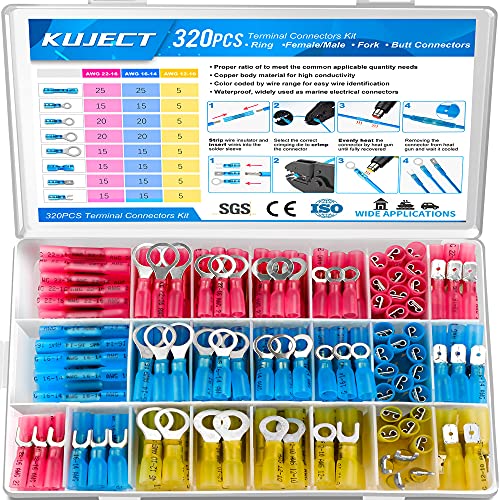 Kuject 320PCS Heat Shrink Wire Connectors Kit, Electrical Waterproof Crimp
Waterproof solder-seal connectors — the right fix for RV vibration and moisture. View on Amazon →
Kuject 320PCS Heat Shrink Wire Connectors Kit, Electrical Waterproof Crimp
Waterproof solder-seal connectors — the right fix for RV vibration and moisture. View on Amazon →
 Scotch Vinyl 700 Electrical Tape, 5 Rolls, Black, 3/4-in x 66-ft, Commercial
Vinyl tape that stays stuck through heat and cold. View on Amazon →
Scotch Vinyl 700 Electrical Tape, 5 Rolls, Black, 3/4-in x 66-ft, Commercial
Vinyl tape that stays stuck through heat and cold. View on Amazon →
Still need help? Ask an RV Mechanic
Get a personalized answer from a verified RV mechanic. Describe your specific issue and get step-by-step help for your rig.
Related Repair Guides
- Ford E450 V10 Reliability: Expected Mileage and Longevity Guide for RV Owners
- Newmar Motorhome Rough Ride Fix: Suspension & Air Pressure
- Ford V10 Triton Engine Maintenance Guide: EGR Delete vs Regular Service Tips
- Ford V10 Turbo Kit for Motorhomes: Cost, Risks & Better Alternatives
- Ford E450 Inertia Switch Location Guide - Find Your RV's Fuel Cutoff Reset Point
- Onan 5500 Generator Problems: Complete Repair Guide
- Fleetwood Excursion Tire Upgrade Guide: 255 to 275 Width Conversion
- Ford E-350 vs E-450 RV Chassis: Fuel, Power & Weight
- Ford F53 7.5L RV Won't Start: Fuel Pump Relay Voltage Drop Fix
- Generac 7.5kW Diesel Generator Repair Guide - RV Troubleshooting
Need More Help?
Try our free RV calculators and tools to help diagnose and plan your repairs.
Browse RV ToolsWeight calculator, electrical planner, propane estimator & more
