Ford E450 RV Tire Cupping: Causes, Diagnosis & Complete Fix Guide
Read full question
I'm scratching my head because everything LOOKS fine. Suspension components seem solid, shocks aren't leaking like my wallet at RV parks. But could the shocks actually be shot at only 36,000 miles? And more importantly - if I just slap new tires on this thing without fixing the root cause, am I just going to end up with expensive cupped tires again?
Quick Answer
Tire cupping on E450 with straight tracking usually means worn shocks - they let the tire bounce and skip. Replace shocks before new tires to prevent the problem recurring.
Short Answer
Yes, your struts could absolutely be the culprit at 36,000 miles, especially on your 2017 Ford E450 Class C. The cupping pattern on your front right tire with the left starting to show similar wear is a classic sign of worn struts, even without visible leakage. Heavy RVs are particularly hard on suspension components, and struts often lose their dampening ability internally before showing external signs of failure. Since your alignment and suspension components check out visually and there's no steering wobble, the struts are the most likely cause of this cupping pattern.
Understanding the Problem
Tire cupping on Class C motorhomes is frequently misunderstood because it presents differently than on lighter vehicles. Your E450 chassis carries significantly more weight than a standard van, which accelerates shock wear. The cupping occurs because worn shocks allow the tire to bounce excessively as it contacts the road surface, creating those characteristic scalloped wear patterns you're seeing on the right front tire.
The fact that your RV tracks straight and turns normally actually supports the shock theory. If this were an alignment issue, you'd typically see uneven wear across the tire width or pulling to one side. Ball joint or tie rod problems would usually create looseness that you'd feel in the steering wheel. The absence of these symptoms, combined with your visual inspection showing solid suspension components, points directly to internal shock failure.
At 36,000 miles on a Class C, your shocks have likely experienced significant damping loss. Ford E450 chassis are known to be hard on front shocks due to the weight distribution and the fact that many owners don't realize shocks need replacement at this interval. The cupping starting on the left side indicates both shocks are wearing at similar rates, which is typical.
What You'll Need
For this repair, you'll need quality MacPherson struts specifically designed for your 2017 E450 chassis. The E450 uses struts, not traditional shocks. Bilstein B6 struts are excellent choices, running about $80-120 (rough ballpark — actual cost varies by region, brand, and model year and changes over time, so get current quotes) each. Monroe struts are a good budget option at $40-60 each. Use the correct strut assembly part for your model (verify with dealer) as specifications vary.
Tool-wise, you'll need basic hand tools including 15mm and 18mm wrenches or sockets, a floor jack rated for at least 3 tons, heavy-duty jack stands, and potentially a spring compressor if you're doing struts instead of traditional shocks. You'll also want penetrating oil like PB Blaster for potentially seized bolts. The job typically takes 2-3 hours in a driveway setting.
Don't forget new tires for the front axle. That cupped tire cannot be saved and will create vibration and noise even with new shocks. You'll likely need two new tires since the wear patterns are different between sides. Budget $300-500 for appropriate load-rated tires for your Class C.
How to Fix It
SAFETY WARNING: Working under a heavy RV requires extreme caution. Use only properly rated jack stands on solid, level ground. Never work under a vehicle supported only by a jack. Ensure your floor jack is rated for at least 3 tons and verify jack stand ratings exceed your RV's front axle weight. Always use appropriate safety equipment.
While a bounce test can work on lighter vehicles, it's not reliable for heavy Class C motorhomes due to their weight. Instead, look for visual signs of shock failure like oil leakage, or have a professional perform a proper suspension inspection. The cupping pattern you're experiencing is already a strong indicator of shock failure.
Jack up the front end safely, supporting it with jack stands on the frame rails, never on suspension components. Remove the wheels to access the shocks. On the E450, you'll typically find two bolts per shock - one at the top attached to the frame and one at the bottom connected to the axle. These bolts often require significant force to remove, especially on a 7-year-old vehicle.
Before installing new struts, keep them in the upright position and avoid manually extending or compressing them as this can damage gas-charged struts. Note that strut replacement typically requires spring compression tools and specialized procedures that differ from traditional shock replacement. Install the new struts with the same orientation as the old ones, ensuring all mounting hardware is torqued to manufacturer specifications (see service manual for exact torque requirements).
After installation, take your RV for a test drive at various speeds. The improvement should be immediately noticeable, with reduced bouncing over bumps and better overall ride quality. The new shocks will also help prevent future tire cupping, but remember you'll still need to replace those damaged tires to eliminate the noise and vibration.
Leave It to the Experts
If you're not comfortable with the bouncing test or lack the tools for heavy-duty suspension work, any reputable RV service center or even a good general automotive shop can handle this repair. The diagnostic process should take about 30 minutes and cost $50-100, while the complete shock replacement typically runs $400-600 in labor plus parts.
Consider professional service if your RV is still under chassis warranty, as some warranty work might be covered. Additionally, a shop can perform a complete front-end alignment check with proper equipment, ensuring there aren't subtle alignment issues contributing to the problem. They can also properly dispose of your old shocks and inspect other suspension components while the vehicle is already lifted.
Many RV service centers offer suspension packages that include shocks, alignment, and tire rotation services. While more expensive upfront, these packages often provide better long-term value and can catch other developing issues before they become major problems. Given that you'll need new tires anyway, bundling these services often results in cost savings and ensures everything is properly coordinated.
Tools & Supplies You'll Need
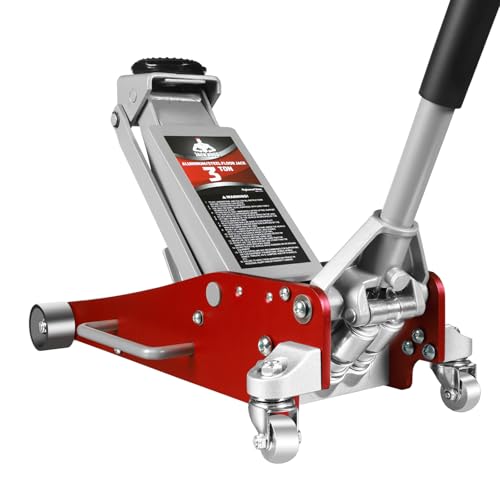 Jack Boss 3 Ton Low Profile, Aluminum and Steel Racing Floor Jack with Dual
Lifts the chassis for tire and suspension work. View on Amazon →
Jack Boss 3 Ton Low Profile, Aluminum and Steel Racing Floor Jack with Dual
Lifts the chassis for tire and suspension work. View on Amazon →
 BIG RED T43202 Torin Heavy Duty Steel Jack Stands: 3 Ton (6,000 lb) Capacity
Hold the rig up safely once it is lifted. View on Amazon →
BIG RED T43202 Torin Heavy Duty Steel Jack Stands: 3 Ton (6,000 lb) Capacity
Hold the rig up safely once it is lifted. View on Amazon →
 CRAFTSMAN 230 Pcs Mechanics Tool Set, Socket Wrench Set, Car Tool Kit with
A broad SAE/metric socket-and-ratchet set covers most RV fasteners. View on Amazon →
CRAFTSMAN 230 Pcs Mechanics Tool Set, Socket Wrench Set, Car Tool Kit with
A broad SAE/metric socket-and-ratchet set covers most RV fasteners. View on Amazon →
Still need help? Ask an RV Mechanic
Get a personalized answer from a verified RV mechanic. Describe your specific issue and get step-by-step help for your rig.
Related Repair Guides
- Ford E450 V10 Reliability: Expected Mileage and Longevity Guide for RV Owners
- Newmar Motorhome Rough Ride Fix: Suspension & Air Pressure
- Ford V10 Triton Engine Maintenance Guide: EGR Delete vs Regular Service Tips
- Ford V10 Turbo Kit for Motorhomes: Cost, Risks & Better Alternatives
- Ford E450 Inertia Switch Location Guide - Find Your RV's Fuel Cutoff Reset Point
- Onan 5500 Generator Problems: Complete Repair Guide
- Fleetwood Excursion Tire Upgrade Guide: 255 to 275 Width Conversion
- Ford E-350 vs E-450 RV Chassis: Fuel, Power & Weight
- Ford F53 7.5L RV Won't Start: Fuel Pump Relay Voltage Drop Fix
- Generac 7.5kW Diesel Generator Repair Guide - RV Troubleshooting
Need More Help?
Try our free RV calculators and tools to help diagnose and plan your repairs.
Browse RV ToolsWeight calculator, electrical planner, propane estimator & more
